Showing posts with label Africa. Show all posts

Monday, July 8, 2013

Obama's Coal Hypocrisy: America NO Africa YES


Africans can burn coal. Americans can’t.

That’s the conclusion to be drawn from the Obama administration’s most recent forays into energy policy.

On June 25, President Obama was at Georgetown University decrying “carbon pollution” and making it clear that he will prohibit any new coal-fired power plants from being built in the U.S. Five days later, while Obama was in Africa, the White House released a fact sheet on its “Power Africa” initiative that aims to double access to electricity in sub-Saharan Africa by helping finance some 10,000 megawatts of new generation capacity in that region.

During his Georgetown speech, Obama used the phrase “carbon pollution” a whopping 30 times. In the document on Power Africa, that phrase doesn’t appear even once. 

The contrast between Obama’s Georgetown speech and his effort to make electricity more available in Africa goes to the crux of the entire climate-change debate. Talk about cutting carbon dioxide emissions may appeal to “green” voters in rich countries where energy is cheap and abundant. It doesn’t sell in Africa or other poverty-stricken regions where energy is scarce and expensive.

In his Georgetown speech, Obama announced a “new national climate action plan” to “protect our country from the impacts of climate change,” as well as a plan to “lead the world in a coordinated assault on a changing climate.” During his remarks, the president repeatedly implied that the U.S. could, on its own, make a major difference in global carbon dioxide emissions and, therefore, in climate change. He said that voters should reward politicians based on their green quotient: “Remind everyone who represents you that . . . sheltering future generations against the ravages of climate change is a prerequisite for your vote.” He went on to say that by limiting emissions from domestic power plants, Americans “will have the satisfaction of knowing that the world we leave to our children will be better off for what we did.”

It’s hard to imagine a bigger fib. And it’s a fib that relies on the public’s near-total ignorance of the realities of global energy use, such as the soaring amounts of carbon dioxide coming from developing countries. But given Obama’s desire to do something about energy poverty in Africa, a laudable goal, let’s look at what’s happening there.

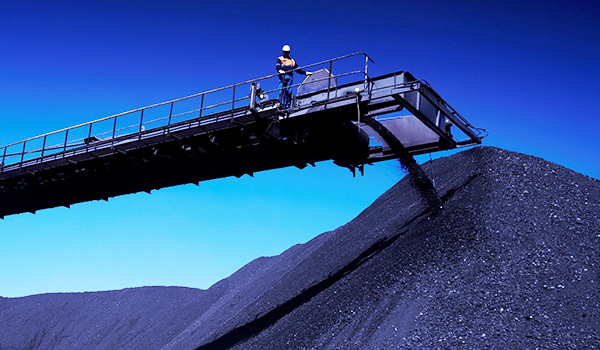
Between 2002 and 2012, the U.S. reduced its “carbon pollution” — to use Obama’s inane phrase — by 8 percent. Meanwhile, in Africa, carbon dioxide emissions rose by nearly 35 percent. Over that same time frame, U.S. coal use dropped by nearly 21 percent. In Africa, coal use jumped by 15 percent. And despite Obama’s cheery talk about “clean energy” and renewables, Africa’s coal use — indeed, Africa’s use of all forms of energy — will continue to soar.

Read More: National Review


Friday, June 28, 2013

Yes, there has been African Slavery in Wash DC Recently.


The African nation of Tanzania was finally held accountable for allowing a diplomat who enslaved an African woman on U.S. soil to return home. 

The diplomat had reportedly been operating at high levels of government. Alan Mzengi was found to be liable for a $1 million civil judgement for forcing a young woman to live and work against her will as a domestic servant on U.S. soil. The judgement came in 2008 after the woman escaped from four years of slavery. She had been kept against her will by the diplomat and forced to be a domestic servant for no pay.
The diplomat fled back to Tanzania in order to avoid consequences for forcibly enslaving the African woman. The Tanzanian president then allowed the slave “owner” to function as an advisor and suffer no legal consequence at home, according to the Washington Post.
Court documents reveal the diplomat asserted that he could not be held responsible because he “is a diplomat credited to the Republic of Tanzania” and that he was “immune to judgement under the Vienna Convention.”
The victim in the case refused any additional money other than back wages for the time she was forced to work for the diplomat, according to court documents.


Hat Tip: Breitbart

Monday, December 31, 2012

Is Mali the next Afganistan or Worse?


MOPTI, Mali (AP) — Deep inside caves, in remote desert bases, in the escarpments and cliff faces of northern Mali, Islamic fighters are burrowing into the earth, erecting a formidable set of defenses to protect what has essentially become al-Qaida’s new country.

They have used the bulldozers, earth movers and Caterpillar machines left behind by fleeing construction crews to dig what residents and local officials describe as an elaborate network of tunnels, trenches, shafts and ramparts. In just one case, inside a cave large enough to drive trucks into, they have stored up to 100 drums of gasoline, guaranteeing their fuel supply in the face of a foreign intervention, according to experts.

Northern Mali is now the biggest territory held by al-Qaida and its allies. And as the world hesitates, delaying a military intervention, the extremists who seized control of the area earlier this year are preparing for a war they boast will be worse than the decade-old struggle in Afghanistan.

“Al-Qaida never owned Afghanistan,” said former United Nations diplomat Robert Fowler, a Canadian kidnapped and held for 130 days by al-Qaida’s local chapter, whose fighters now control the main cities in the north. “They do own northern Mali.”

Al-Qaida’s affiliate in Africa has been a shadowy presence for years in the forests and deserts of Mali, a country hobbled by poverty and a relentless cycle of hunger. In recent months, the terror syndicate and its allies have taken advantage of political instability within the country to push out of their hiding place and into the towns, taking over an enormous territory which they are using to stock arms, train forces and prepare for global jihad.

Al-Qaida in the Islamic Maghreb, known as AQIM, operates not just in Mali, but in a corridor along much of the northern Sahel. This 7,000-kilometer (4,300-mile) long ribbon of land runs across the widest part of Africa, and includes sections of Mauritania, Niger, Algeria, Libya, Burkina Faso and Chad.

Read More: Associated Press


Tuesday, December 11, 2012

The Other Susan Rice File


On June 8, 1999, before the Senate Foreign Relations Committee, Ms. Rice, then the assistant secretary of state for African affairs, delivered testimony on a range of issues, and little Sierra Leone was high on the list. An elected civilian government led by a former British barrister named Ahmad Kabbah had been under siege for years by a rebel group known as the Revolutionary United Front, led by a Libyan-trained guerrilla named Foday Sankoh. Events were coming to a head.

Even by the standards of Africa in the 1990s, the RUF set a high bar for brutality. Its soldiers were mostly children, abducted from their parents, fed on a diet of cocaine and speed. Its funding came from blood diamonds. It was internationally famous for chopping off the limbs of its victims. Its military campaigns bore such names as "Operation No Living Thing."

In January 1999, six months before Ms. Rice's Senate testimony, the RUF laid siege to the capital city of Freetown. "The RUF burned down houses with their occupants still inside, hacked off limbs, gouged out eyes with knives, raped children, and gunned down scores of people in the street," wrote Ryan Lizza in the New Republic. "In three weeks, the RUF killed some 6,000 people, mostly civilians."
What to do with a group like this? The Clinton administration had an idea. Initiate a peace process.

Read More: Wall Street Journal Online